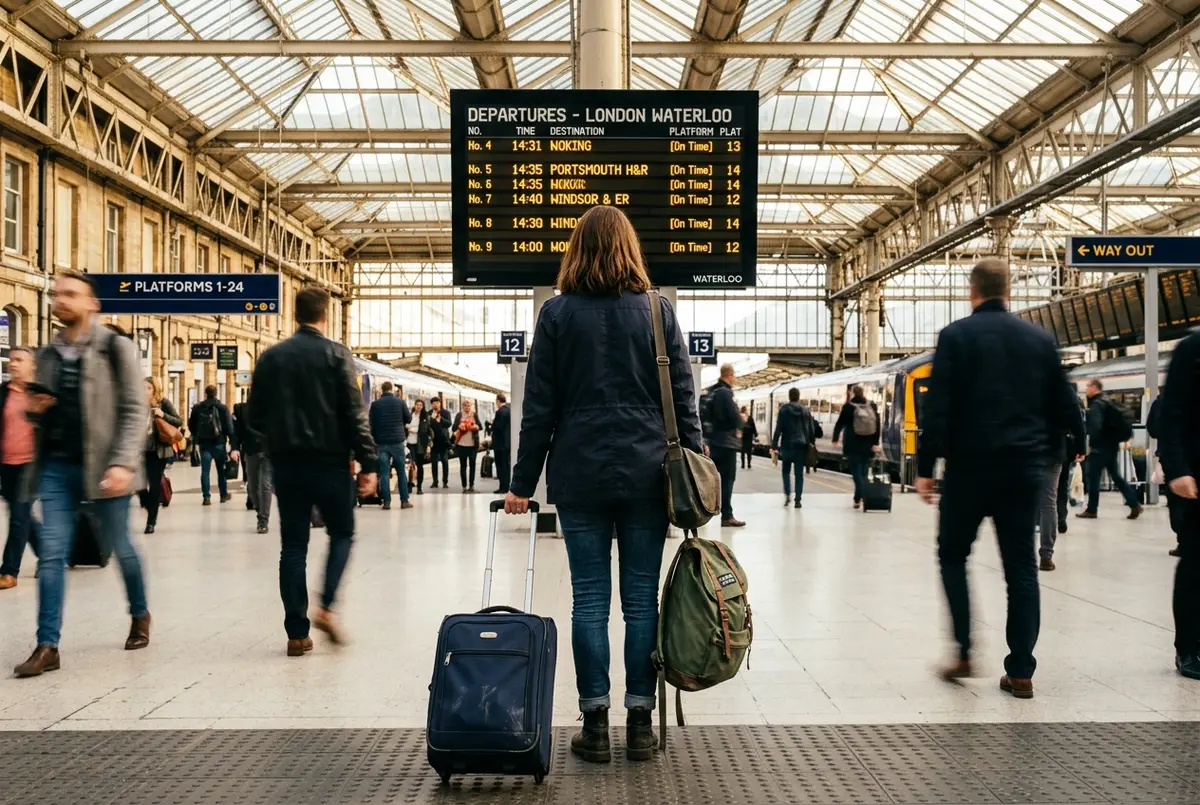
A london day trip by train depends entirely on getting one detail right before anything else: which station your destination actually departs from, since London doesn’t have one central terminal that serves every direction out of the city. Here’s what I’d actually do first: match your destination to its station before you even look at ticket prices, because booking from the wrong one is a mistake that costs real time on the day itself.
I’ll go through which station serves which of this site’s day trip destinations, how off-peak pricing actually works, and when I’d book ahead versus just turning up. Since every one of these trips ends with you back in London by evening, it’s worth seeing what a Thames cruise costs and how long it runs once you know which train you’re catching, so you can decide if an evening sailing still fits your day.
Which London Station Serves Which Day Trip?
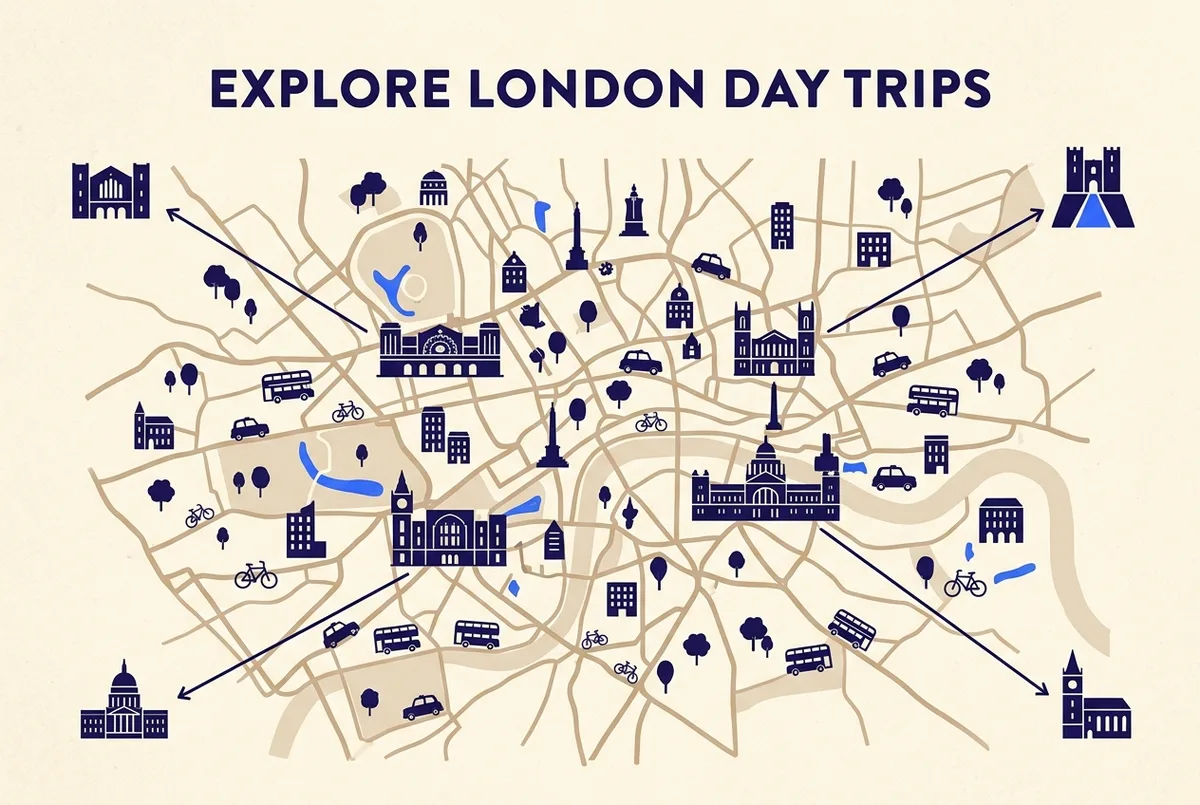
London Waterloo serves Stonehenge, via a connecting bus from Salisbury, London Paddington serves Windsor Castle directly, London Marylebone serves Stratford-upon-Avon directly, and London St Pancras serves Paris via the Eurostar. The Cotswolds doesn’t have one clean departure station, which is exactly why that trip usually needs a guided tour or a car instead.
I’d double check your specific station on the booking confirmation before travel day, since a couple of these routes, Stonehenge in particular, run from stations that aren’t always the first one people assume.
How Do You Get to Stonehenge by Train?
The route runs from London Waterloo to Salisbury, taking around 1.5 hours, followed by a connecting bus service out to the stones themselves that adds roughly 30 to 40 minutes. My full Stonehenge day trip guide covers this route alongside the guided coach alternative in more detail.
I’d check the connecting bus timetable at Salisbury before you leave London, since that service runs far less frequently than the train itself, and missing one by a few minutes can mean a longer wait than you’d expect.
How Do You Get to Windsor Castle by Train?
A direct train from London Paddington reaches Windsor in around 50 minutes, making it one of the simplest, most direct routes on this entire list with no connections required. My Windsor Castle day trip guide has the full walking directions from the station to the castle itself.
I’d recommend this route specifically to anyone new to planning UK day trips, since a single direct train with no changes removes almost every way a day out like this can go wrong.
How Do You Get to Stratford-upon-Avon by Train?
A direct train from London Marylebone takes about 2 hours, with no changes needed on the fastest services. My Stratford-upon-Avon and Scotland guide covers what’s realistic to see there in a single day.
I’d book the earliest direct service you can manage on this route, purely to maximize your actual time in the town rather than sitting on a train longer than necessary.
How Do You Get to Paris by Train?
The Eurostar departs from London St Pancras and reaches Paris Gare du Nord in about 2 hours 15 minutes, crossing the Channel Tunnel along the way. My London to Paris day trip guide covers realistic timing once you arrive and what’s actually doable in a single day.
I’d arrive at St Pancras with extra time built in beyond what you’d allow for a normal domestic train, since the Eurostar runs its own border checks before boarding rather than after arrival.
Why Doesn’t the Cotswolds Have a Direct Train Route?
The villages most visitors actually want to see, places like Bibury or Bourton-on-the-Water, sit away from the main rail lines, so there’s no single fast train that gets you there the way there is for Stonehenge or Windsor. My Cotswolds day trip guide explains why a guided tour or a hire car genuinely is the better option for this one.
I wouldn’t attempt the Cotswolds by public transport alone unless you’re comfortable with a long, multi-leg journey that eats heavily into your actual sightseeing time. The other routes on this page don’t carry that same penalty.
Should You Book Train Tickets in Advance?
Yes, for nearly every route on this list, and the savings can be substantial, particularly for longer journeys like the Eurostar to Paris. Advance fares are typically released weeks ahead and get more expensive as the travel date approaches, sometimes significantly so in the final days before departure.
I’d book the moment your travel date is fixed rather than waiting, since the cheapest fare tiers on popular routes tend to sell out first, leaving only the pricier options by the time you actually commit.
What’s the Difference Between Peak and Off-Peak Fares?
Off-peak fares apply outside the busiest commuter windows, typically avoiding the early morning and early evening rush, and can cost noticeably less than a peak ticket on the same route. Since most day trips naturally avoid peak commuter times anyway, this often works in your favor without you having to plan around it specifically.
I’d check the off-peak time windows for your specific route before booking, since they vary slightly by operator and aren’t always as intuitive as “just avoid rush hour” suggests.
Can You Just Turn Up and Buy a Ticket on the Day?
For most of these routes, yes, though you’ll usually pay more than if you’d booked in advance, and on the Eurostar specifically, walk-up tickets can be considerably pricier than an advance fare booked even just a few days out. I’d treat turning up on the day as a backup plan rather than the default approach.
I’d only rely on a walk-up ticket if your plans are genuinely last minute or uncertain, since the price gap on some of these routes is large enough that advance booking is worth the small loss of flexibility for almost everyone else.
Do Any of These Routes Require Seat Reservations?
The Eurostar to Paris requires a specific train and time slot booked in advance rather than an open ticket, since it functions more like booking a flight than a standard domestic train. The UK domestic routes, Waterloo to Salisbury, Paddington to Windsor, and Marylebone to Stratford-upon-Avon, are generally more flexible and don’t require a fixed seat reservation on most ticket types.
I’d still book my exact Eurostar time slot as early as reasonably possible, since the cheapest fares are tied to specific departures rather than being valid on any train that day.
What Should You Bring for a Train Day Trip?
Your ticket, whether printed or on your phone, a passport if you’re heading to Paris, and comfortable shoes for whatever walking your destination involves once you arrive. I’d travel lighter than feels natural for all of these routes, since you’re carrying everything around all day with no hotel room to drop bags in.
I’d also keep a backup screenshot of any mobile ticket, since station Wi-Fi and signal can be patchy right at the barriers, and a dead phone battery is a genuinely bad time to discover you need to pull up a QR code.
My Honest Recommendation
Book in advance wherever the option exists, match your destination to the right departure station before anything else, and treat a walk-up ticket as a fallback rather than a plan. That approach has saved me real money and real stress on every one of these specific routes. My guide to the best day trips from London is the page I’d read first if you’re still choosing between destinations rather than booking tickets. National Rail is the authoritative source for current UK train times and fares across every domestic route on this page. Once you’re back in London for the evening, you can book your london boat tour and fit a sightseeing cruise in before the day is over.
Frequently Asked Questions
Which London station do you leave from for Stonehenge?
London Waterloo, with a connecting bus from Salisbury to the stones themselves, adding about 30 to 40 minutes to the train journey.
Which London station serves Windsor Castle?
London Paddington, with a direct train taking around 50 minutes and no connections required.
Do you need to book train tickets for a day trip in advance?
Yes, for most routes, since advance fares are typically cheaper and get more expensive as the travel date approaches.
Can you reach the Cotswolds by train from London?
Not easily. There’s no single direct train to the villages most visitors want to see, which is why a guided tour or car is the better option for that trip.
What’s the difference between peak and off-peak train fares?
Off-peak fares apply outside the busiest commuter windows and typically cost less, though exact times vary slightly by operator and route.