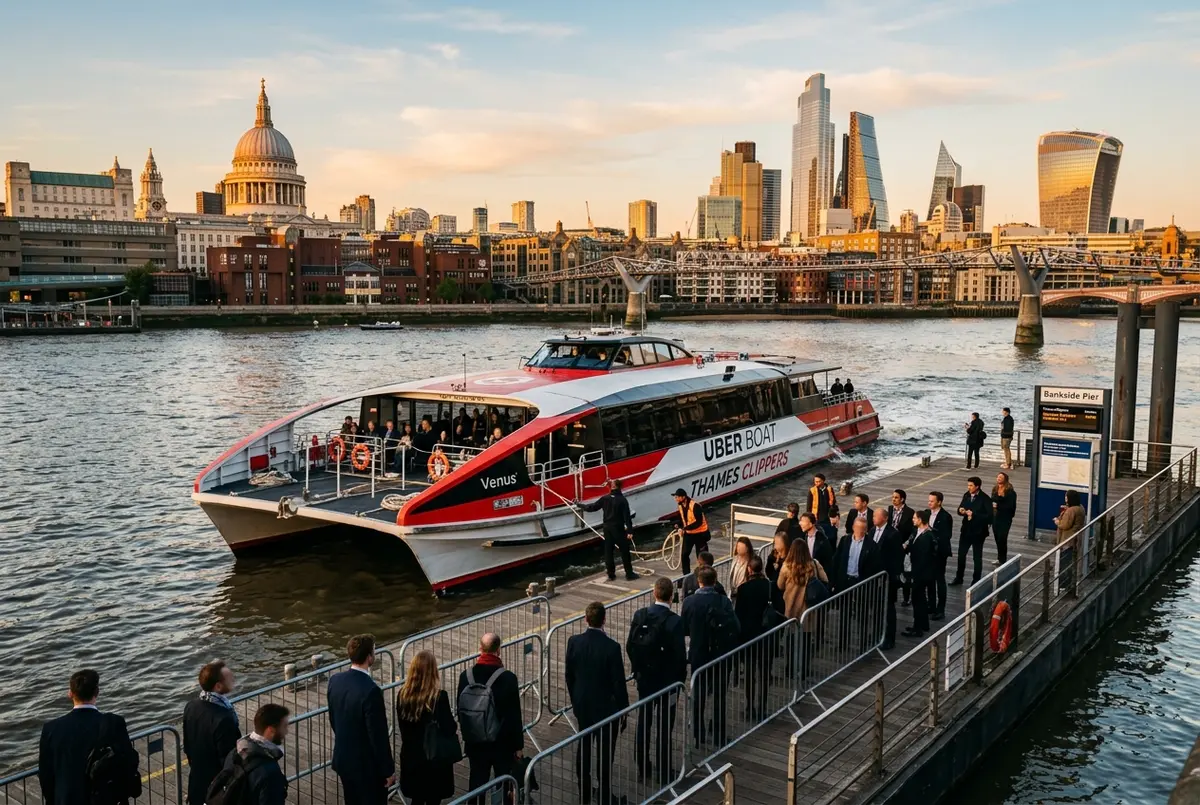
Search “uber of boats” and you’ll land on Uber Boat by Thames Clippers, a scheduled river bus service on the Thames, not a ride hailing app that happens to float. Here’s what I’d actually clear up before you go any further: this is a fast, frequent commuter service between piers, run by a private operator called Thames Clippers, with Uber attached only as a sponsor’s name since 2020.
I’ll go through what the service actually is, where it runs, how it’s priced and ticketed, and the one thing that matters most if you landed on this page by accident: whether you actually wanted a river bus or a sightseeing cruise. Since the two are genuinely different products on the same river, it’s worth seeing how every Thames ticket on this river is grouped by type and starting price once you’ve worked out which one you actually need.
Is “Uber Boat” Actually an Uber?
No. Despite the name, Uber Boat by Thames Clippers has nothing to do with Uber’s ride hailing app beyond a sponsorship deal. You can’t hail one through the Uber app, and there’s no on demand pickup. It runs on a fixed timetable between fixed piers, exactly like a bus route, just on water instead of road.
My honest take: this is one of the more confusing brand names on the Thames, and I don’t think that confusion is an accident. “Uber” in the sponsorship sense borrows instant recognition from a completely different kind of transport, and a lot of first time searchers land here expecting something it isn’t.
What Is Uber Boat by Thames Clippers, Exactly?
It’s a scheduled catamaran river bus service, operated by a private company called Thames Clippers, integrated into Transport for London’s wider transport network. The boats are fast, purpose built catamarans designed for quick, frequent trips rather than slow sightseeing, and the service has carried commuters and visitors along the Thames for over two decades under various sponsor names before Uber’s current branding.
I’d think of it the same way I’d think of a bus or a tram line, just one that happens to run on the river instead of a road. That framing alone clears up most of the confusion I see in this search term.
Where Do the Piers Run, From West to East?
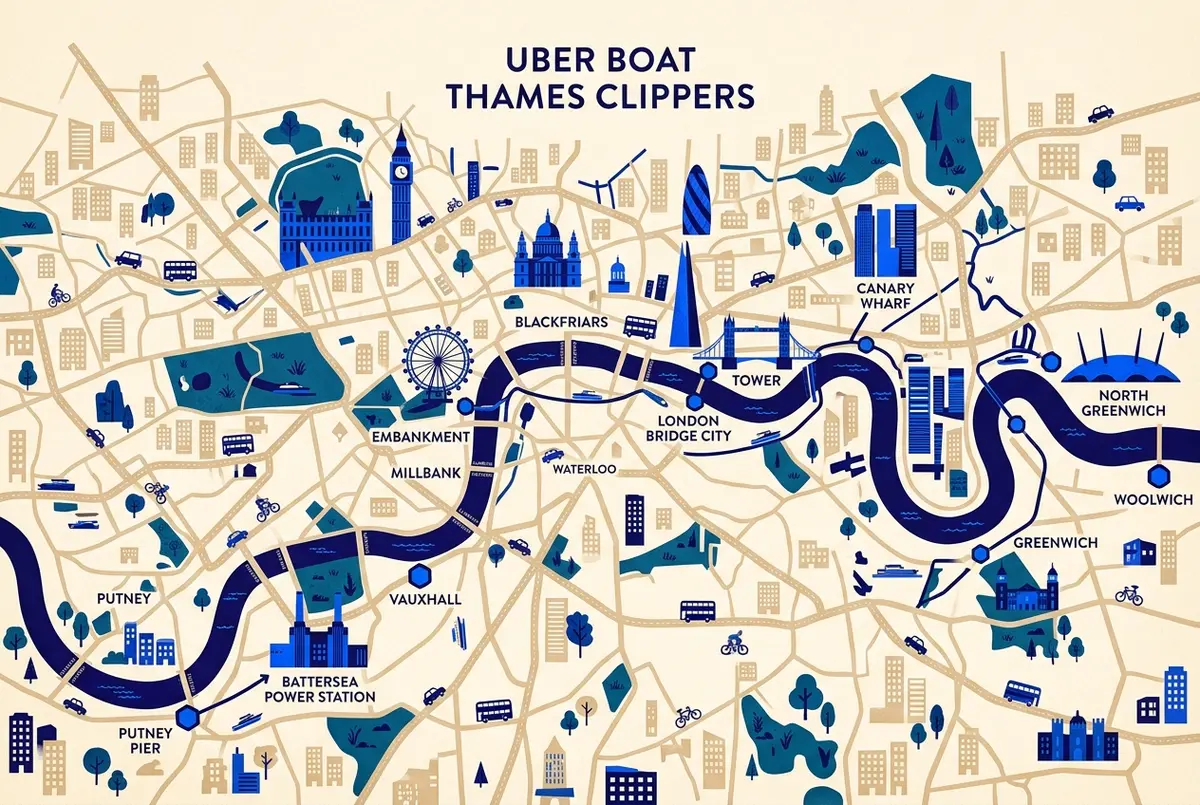
The network spans a long stretch of the river, roughly from Putney in the west out to Royal Arsenal Woolwich in the east, calling at piers including Putney, Chelsea Harbour, Battersea Power Station, Millbank, Westminster, Embankment, Blackfriars, Bankside, London Bridge City, Tower, Canary Wharf, Greenwich, and North Greenwich, among others. I’d check the current pier map on the operator’s own site before you travel, since piers and route numbers do shift occasionally as the network grows.
I’d use this pier list as a rough mental map rather than memorizing exact stops, since the service’s real strength for a visitor is that it touches most of the landmarks you’d want to see anyway, even if you’re riding it purely to get somewhere rather than to sightsee.
Is This a Commuter Service or a Tourist Attraction?
Primarily a commuter service, with tourist use as a genuine secondary benefit rather than the main design goal. Peak hours run more frequently to move Londoners between home, work, and the City or Canary Wharf, while a visitor can ride the exact same boat during the day purely for transport or for the view along the way.
I’d book it as transport first and treat any sightseeing as a bonus. If sightseeing is actually your primary goal, there’s a better tool on this river for that specific job, which I’ll get to next.
How Does It Compare to a Sightseeing Cruise?
Quite differently, even though both ride the same river. A river bus gets you from pier A to pier B as fast as the schedule allows, with no live guide commentary and no planned stops for photos. A sightseeing cruise, like the ones covered on my complete Thames river cruise guide, circles or runs a scenic route specifically for the view, with live commentary explaining what you’re looking at as it passes.
My Thames Clippers versus sightseeing cruise comparison goes deeper into this exact choice. My short version: if your goal is genuinely to get somewhere, take the Clipper. If your goal is to see the river itself, book a sightseeing cruise instead and treat the destination as secondary.
How Much Does a Ticket Cost?
Fares are priced by zone rather than as one flat rate, so a short hop between adjacent piers costs less than a long run from one end of the network to the other. My Uber Boat tickets and prices guide breaks the fare structure down in full, including single fares, day passes, and how they stack up against a standard sightseeing cruise ticket.
I’d check the current zone fare chart on the operator’s own app or site before you travel, since exact fares move over time and I’d rather point you to the live source than quote a number that’s gone stale by the time you read this.
Yes, both are accepted for pay as you go travel, and a valid Travelcard typically earns a discount off the standard fare, similar to how Oyster discounts work across the rest of London’s transport network. My fares and zones guide covers exactly how the zone pricing and card discounts work together.
I’d tap in and out with the same card you use for the Tube and buses if you already have one, rather than buying a separate paper ticket, since that’s generally the simplest way to pay on this specific service.
Is There an App?
Yes, the operator runs its own app under the current Uber Boat branding, which shows live departure times, route maps, and lets you buy tickets directly on your phone rather than queuing at a pier kiosk. Live tracking through the app is genuinely useful here, since river traffic and tide conditions can shift actual departure times slightly from the printed timetable.
I’d download the app before your trip if you’re planning to use this service more than once, purely for the live departure board. It saves standing at a pier guessing whether the next boat is two minutes away or twelve.
What Are the Route Numbers, and Do They Matter to a Visitor?
The network runs several numbered routes, commonly labeled things like RB1, RB2, RB4, and RB6, each covering a different stretch or combination of piers, plus a separate Tate to Tate boat service connecting Tate Britain and Tate Modern directly. For a one off visitor trip, the exact route number matters less than simply checking which boat from your departure pier reaches your destination pier, which the app or pier signage will tell you directly.
I wouldn’t memorize the route numbers unless you’re using this service regularly. For an occasional rider, I’d just check the live departure board at your pier and board whichever numbered service is heading to your stop.
No, and this is the single biggest practical difference from a dedicated sightseeing product. There’s no guide narrating the Houses of Parliament, Tower Bridge, or the O2 Arena as you pass them. You’ll see the same landmarks from the water, but you’re left to recognize them yourself rather than having them pointed out.
I’d personally find this totally fine if I’m just commuting, and genuinely limiting if sightseeing was actually my goal for the trip. That gap is exactly why the sightseeing cruises on this site exist as a separate product rather than the same boat wearing a different hat.
Who Should Actually Book This Instead of a Sightseeing Cruise?
Anyone genuinely trying to get from one part of London to another along the river corridor, especially during the day when traffic on the roads or the Tube might be slower or more crowded than the boat. It’s also a reasonable, cheap way to see the river in passing if your main goal is transport and any sightseeing is a welcome side effect rather than the point.
I’d book this specifically when I have somewhere to actually be, Canary Wharf for a meeting, Greenwich for an afternoon, the O2 for an event, rather than when “see the Thames” is the whole plan for my day.
Who Should Skip It and Book a Sightseeing Cruise Instead?
Anyone whose main goal is the river itself: the landmarks, the commentary, a dedicated hour or more specifically built around looking at London from the water rather than getting anywhere in particular. If that’s you, my Westminster to Greenwich sightseeing cruise or the hop-on hop-off ticket are built for exactly that goal in a way the river bus simply isn’t designed to be.
I wouldn’t book the river bus purely for sightseeing value and then feel short changed by the lack of commentary. That’s not a flaw in the service, it’s just not what it’s built to do.
Is It a Good Way to See London’s Landmarks?
In passing, yes, genuinely. The route touches the London Eye, the Houses of Parliament, Tower Bridge, the Tower of London, and Canary Wharf’s skyline, among others, all visible from the open deck as you pass. What it doesn’t give you is anyone telling you what you’re looking at, or a schedule built around lingering near any particular landmark.
I’d treat any sightseeing you get from this service as a free bonus layered on top of a transport trip, not as a reason to book it on its own. If the landmarks are genuinely the goal, a dedicated cruise does that job properly.
How Often Do the Boats Run?
Frequently during peak commuter hours on weekdays, typically every 10 to 20 minutes on the busiest central stretches, and somewhat less often outside peak times and on weekends. I’d check the live timetable on the app for your specific pier and time of day rather than assume a fixed frequency applies everywhere on the network equally.
I’d build a little buffer into your plans if you’re relying on this for a specific appointment, since frequency does genuinely drop outside the core commuter windows, and the last thing you want is a tight connection resting on an infrequent off-peak sailing.
Is It Accessible for Wheelchair Users and Families?
Most piers and boats on this network offer step-free or accessible boarding, though I’d confirm the specific pier you’re using in advance rather than assuming every stop on this large network is equally accessible, since older or smaller piers can vary. Families traveling with pushchairs will generally find it manageable, similar to boarding a bus with a pushchair.
I’d check accessibility for your specific pier directly with the operator if this is a firm requirement for your trip, rather than assuming blanket accessibility across a network this size.
What’s the History Behind the “Uber Boat” Name?
Thames Clippers has run this river bus network under a series of different sponsor names over the years, and Uber became the latest sponsor in 2020, lending its name to the service in exchange for brand visibility, in the same way sponsors attach their names to football stadiums or cycle hire schemes. The underlying operator, the boats, and the routes stayed the same through that change; only the paint and the name changed.
I’d stop reading too much into the Uber name beyond that. It’s a sponsorship arrangement, not a sign that the ride hailing company is involved in running boats on the Thames.
My Honest Recommendation
Book Uber Boat by Thames Clippers when you actually need to get somewhere along the river corridor and want a fast, frequent, reasonably priced way to do it, especially if Oyster or contactless pay as you go already covers the rest of your London travel. Skip it, and book a proper sightseeing cruise instead, if the river itself, the landmarks, and live commentary are what you actually came here for. My fares and zones guide and tickets and prices guide go deeper into the practical booking details, and my Thames Clippers versus sightseeing cruise comparison walks through that exact decision in full. If sightseeing was the actual goal all along, my complete Thames river cruise guide and my London Eye river cruise combo guide are the pages I’d read next. Transport for London’s own page on river services carries the current, authoritative pier map and timetable. Whichever one you actually need, you can see every London boat tour on this river before you commit.
Frequently Asked Questions
Is Uber Boat by Thames Clippers connected to the Uber app?
No. It’s a scheduled river bus operated by Thames Clippers, with Uber attached only as a sponsor’s name since 2020. There’s no on demand hailing through the Uber app.
Can I use my Oyster card on Uber Boat?
Yes, Oyster and contactless pay as you go are both accepted, and a valid Travelcard typically earns a discount off the standard fare.
Is there live commentary on the boat like a sightseeing cruise?
No. It’s a point to point transport service with no guide narrating the landmarks as you pass them.
Should I book this instead of a Thames sightseeing cruise?
Only if your main goal is transport. For dedicated sightseeing with commentary, a standard sightseeing cruise is the better fit.
Where does the network run?
Roughly from Putney in the west to Royal Arsenal Woolwich in the east, calling at piers including Westminster, Tower, Canary Wharf, and Greenwich among others.