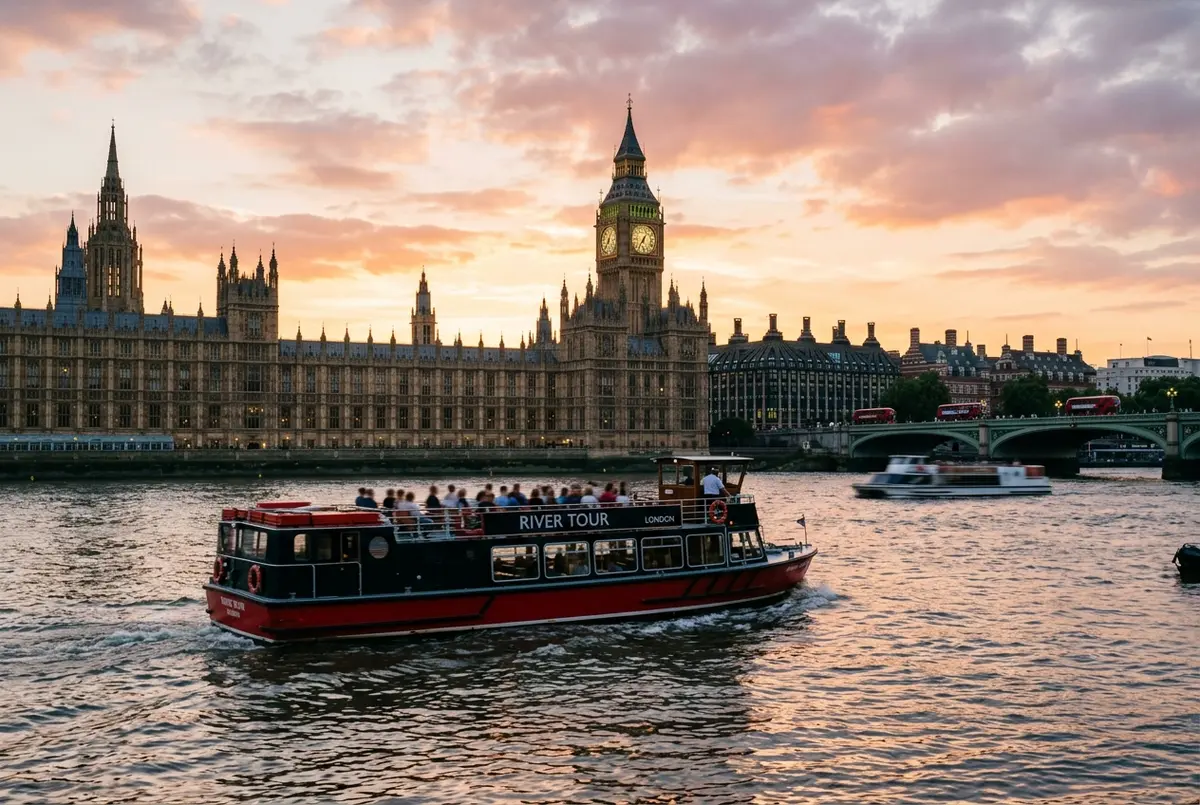
A history of London tour by boat means one thing above all: a Thames river cruise, and specifically the stretch between Westminster and Greenwich, where more historic and modern landmarks sit along one riverbank than almost anywhere else in the city. Here’s what I’d do before you board: skim this list first, since the live commentary moves quickly and doesn’t always linger on the details that make each building worth knowing about.
I’ll run through the landmarks in the order the boat actually passes them, so you know what to look for and when, rather than trying to take it all in at once as it goes by.
What Order Do the Landmarks Appear In?
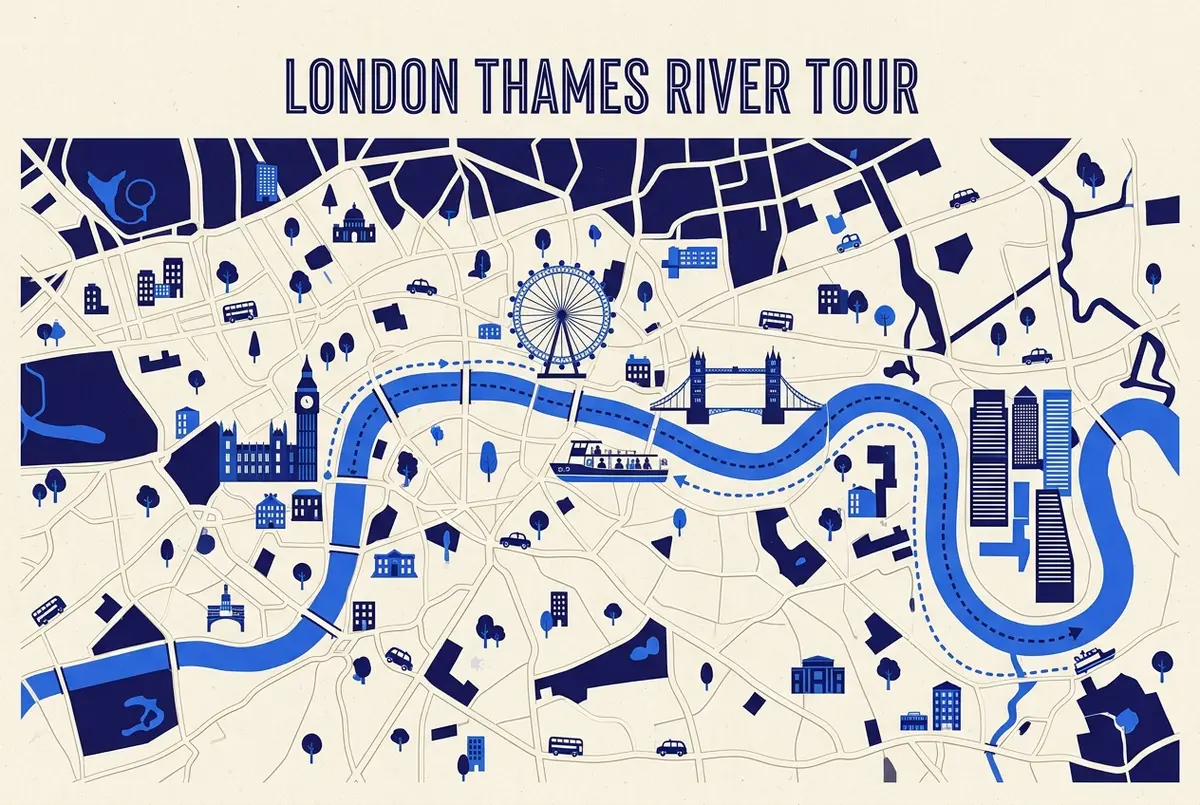
On the classic Westminster to Greenwich route, you’ll pass the Houses of Parliament first, then the London Eye and South Bank, Tate Modern, Tower Bridge and the Tower of London, and finally Canary Wharf before arriving at Greenwich. The order is fixed by the direction the boat sails, downstream from Westminster, so it’s the same sequence on every sightseeing sailing along this route.
I’d use this order to plan your photos rather than guessing landmark by landmark as they appear. Knowing Tower Bridge comes roughly 30 to 35 minutes in, for example, means you can be on the open deck with your camera ready instead of scrambling once it’s already passing.
The Houses of Parliament and Big Ben
The journey starts right next to the Houses of Parliament, the seat of the UK’s government since the 11th century, though the current Gothic Revival building dates mostly from the 1840s after a fire destroyed most of the earlier structure. Big Ben, technically the name of the bell rather than the tower, strikes from the Elizabeth Tower at its northern end.
I’d call this the single most recognisable sight on the entire route, and it’s the first thing most passengers photograph, often before the boat has even properly got underway.
The London Eye and the South Bank
Just across the river, the London Eye has become one of London’s most visited paid attractions since it opened in 2000, a 135-metre observation wheel built to mark the millennium. The surrounding South Bank, including the Royal National Theatre, developed into London’s cultural strip through the second half of the 20th century, a deliberate rebuild after the area was heavily bombed during the Second World War.
I’d point out that pairing this stretch with an actual ride on the Eye is a popular combination for a reason. My London Eye river cruise combo guide covers how that pairing works if you want to do both.
Tate Modern and the Millennium Bridge
The boat passes under the Millennium Bridge, a pedestrian footbridge that famously had to close for retrofitting shortly after its 2000 opening due to an unexpected swaying motion, before reaching Tate Modern. The gallery itself occupies a former power station, Bankside Power Station, converted into one of the world’s most visited modern art museums in the early 2000s.
I think this stretch is underrated on the commentary, since it’s easy to focus purely on the famous bridge and miss how recently this whole riverbank transformed from industrial use into one of London’s major cultural destinations.
The Shard and the Tower of London
The Shard, Western Europe’s tallest building when it completed in 2012, dominates the skyline just before the boat reaches the Tower of London, a fortress with roots stretching back to William the Conqueror’s original White Tower in 1078. Together they give one of the clearest visual contrasts on the whole route: nearly a thousand years of history standing beside one of the city’s newest landmarks.
I’d slow down here mentally even if the boat doesn’t, since the Tower of London has served as a royal residence, a prison and an execution site across its history, far more than the fortress-and-crown-jewels image most visitors arrive with.
Tower Bridge
Tower Bridge, completed in 1894, is the most photographed single structure on this entire route, and I’d say that reputation is earned. Its distinctive bascule design, the two halves that raise to let tall ships through, was a genuinely novel engineering solution for a river that needed both a crossing and continued access for shipping traffic heading further upstream.
I’d make sure you’re on the open deck a few minutes before the boat reaches it rather than after, since this is the stretch where most passengers reach for their cameras at once. My guide to the Westminster to Greenwich route covers exactly when in the journey this landmark appears.
Canary Wharf
The scenery shifts sharply after Tower Bridge, from centuries-old fortresses to the glass towers of Canary Wharf, built from the 1980s onward on the site of London’s former docklands after the original port trade had largely moved elsewhere. It’s one of Europe’s major financial districts today, and I think the contrast with everything you’ve just passed is part of what makes this route so effective as a single-hour overview of London.
I’d treat this stretch as the modern bookend to the historic landmarks earlier in the journey, proof that the Thames has kept reshaping the city around it for as long as it’s been navigable.
Greenwich
The route ends at Greenwich, home to the Cutty Sark, a preserved 19th-century tea clipper, and the Royal Observatory, which sits directly on the Prime Meridian and gave the world its reference point for Greenwich Mean Time. Maritime history runs deep here, since Greenwich served as a centre for British naval power and navigation for centuries before the boats here became purely for sightseeing.
I’d give yourself real time ashore at Greenwich if any of this interests you, rather than treating the pier purely as a turnaround point. My guide to the boat trip from London to Greenwich covers what’s genuinely worth doing once you step off.
Does Every Cruise Cover the Same Landmarks?
No. A Thames dinner cruise departing from Westminster Pier covers a different stretch after dark, with the O2 Arena and an illuminated Canary Wharf standing in for some of the daytime sights above, and the illuminated night cruise is built specifically around nine lit bridges rather than the full daytime landmark list. My complete Thames river cruise guide compares the main cruise types if you want to match the right route to the landmarks you care about most.
I’d check the specific route map on your listing before assuming a dinner or specialty cruise covers the same ground as the classic sightseeing trip, since several genuinely don’t.
The live commentary covers the basics well, but it moves at the pace of the boat, not at the pace of a museum exhibit, so detail gets compressed or skipped when several landmarks appear close together. I’d read a page like this one beforehand if history is a genuine interest rather than a nice-to-have, since you’ll get far more out of the same hour on the water.
For a deeper dive into the river itself rather than any single landmark, the Port of London Authority’s history of the River Thames is a solid, free resource worth a few minutes before you board.
My Honest Recommendation
Read through this list before your cruise rather than during it, since trying to absorb nine centuries of history while also trying to photograph Tower Bridge is a losing battle. The Westminster to Greenwich route remains my pick for covering the most landmarks per minute of any Thames cruise, and once you know what’s coming and roughly when, the live commentary becomes a bonus rather than your only source. You can see today’s London boat tour options once you’ve decided which landmarks matter most to you.
Frequently Asked Questions
What landmarks do you see on a Thames river cruise?
The Houses of Parliament, the London Eye, Tate Modern, Tower Bridge, the Tower of London and Canary Wharf, in that order on the Westminster to Greenwich route.
Does a Thames cruise explain the history of the landmarks?
Yes, most sightseeing cruises include live or recorded commentary covering the history of each major landmark as the boat passes.
Is Tower Bridge the most famous sight on a Thames river cruise?
It’s widely considered the most photographed single landmark on the route, though the Houses of Parliament are often the first thing passengers recognise.
Do all Thames cruises pass the same landmarks?
No, routes vary. Dining and specialty cruises in particular can cover a shorter or different stretch than the full Westminster to Greenwich sightseeing route.